KPL
In a recent interview on December 17, Mr. Dola Sayalop, Project Facilitator for the Agriculture for Nutrition (AFN) project under the World Food Programme (WFP), highlighted the significant progress being made in Lamam district to improve food security and rural livelihoods.
From Response to Resilience
Born out of the need to recover from the economic impacts of the COVID-19 pandemic in 2019, the AFN project is a collaborative effort supported by the Government of Laos and the Global Agriculture and Food Security Programme (GAFSP). The project’s primary mission is twofold: to increase household income by 20% and to ensure a sustainable, year-round food supply for local communities.
Measurable Impact: A 90% Success Rate
One of the most striking outcomes shared by Mr. Dola is the shift in community behavior. Before the project’s intervention, many households did not engage in home gardening or small-scale livestock rearing.

"After conducting surveys and educating the community on the importance of self-sufficiency for nutrition, we have seen a remarkable transformation," Mr. Dola stated. "Today, approximately 90% of households in the target areas have established their own home gardens and small livestock pens."
Strategic Implementation and Investment
The project follows a community-driven model, requiring at least an 85% participation rate from villagers during the planning phase. To ensure long-term health benefits, the project focuses heavily on the "first 1,000 days" of life, providing specialized nutrition training for families with children under the age of two.
To kickstart these activities, eligible households receive a financial grant of 2.5 million Kip. This capital allows families to invest in seeds, tools, and small livestock.
Focus on Preservation and Future Growth
Recognizing that some villages face seasonal challenges in growing vegetables, the project has introduced food processing and preservation techniques. This ensures that families have access to a diverse diet even during the "lean seasons."
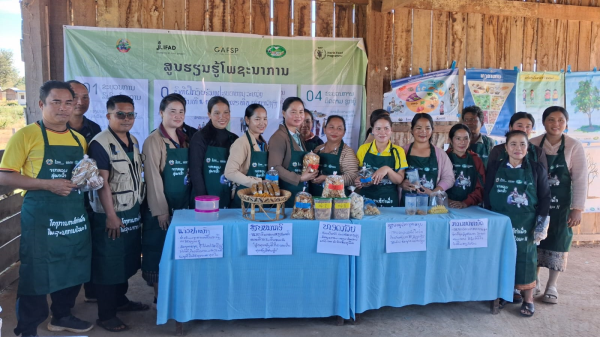
The first phase of this training was recently completed in 5 target villages, involving 15 participants—the majority of whom (12) were women, highlighting the project's role in women's empowerment.
The Road Ahead
While the project has faced minor infrastructure hurdles, such as expanding water systems to reach all areas, the momentum remains strong. With 25 target villages in Lamam district, the project successfully covered the first batch of five villages this year.
"Our goal is to reach all 25 villages in Lamam," Mr. Dola concluded. "We are already preparing to expand our activities to the remaining 20 villages in the coming year."
Nationwide, the Agriculture for Nutrition project aims to support at least 18,000 households, creating a healthier and more food-secure future for the people of Laos.
KPL

