KPL
Laos has reaffirmed its commitment to strengthening cooperation with China and ASEAN in artificial intelligence (AI), green energy and the digital economy on Nov 23, as a senior Lao official outlined the country’s development priorities at the 2026 China-ASEAN Week in Chongqing, China.
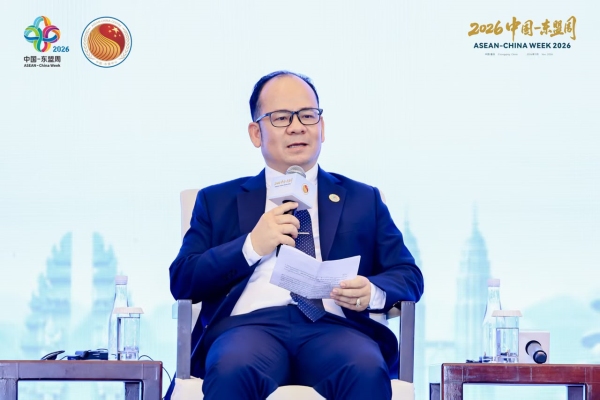
Mr. Khammone Chanthachith, Deputy Head of the Commission for Information and Education of the Party Central Committee
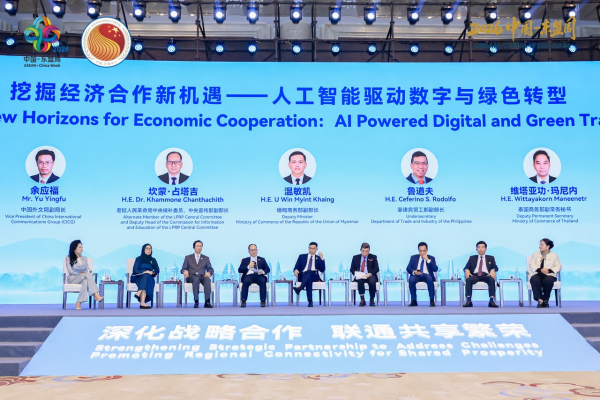
Speaking at the High-level Dialogue segment, the Deputy Head of the Commission for Information and Education of the Party Central Committee, Mr. Khammone Chanthachith expressed appreciation to the Chongqing government for its hospitality and congratulated China and ASEAN on the 35th anniversary of their dialogue partnership, as well as the 65th anniversary of diplomatic relations between Laos and China.
Mr. Khammone said the theme of this year’s event was particularly relevant, reflecting global development trends and the growing role of artificial intelligence in promoting green transformation.
“Many countries have entered the era of the Fourth Industrial Revolution, and artificial intelligence and digital technology have become the main drivers of development,” the official said, adding that Laos was actively adapting to these changes.
Laos Sets Ambitious Digital Development Goals
The official highlighted the country’s development priorities under the resolution of the 12th National Congress of the LPRP and the 15th Five-Year Plan for National Economic Development.
Laos aims to achieve middle- and high-income country status by 2035 through knowledge-based and environmentally sustainable economic development.
Key targets include expanding 5G network coverage and e-government services nationwide, while increasing the digital economy’s contribution to gross domestic product (GDP) to 7 percent by 2030 and 10 percent by 2040.
The official described Laos as a country with a stable supply of clean energy and significant potential to benefit from regional digital connectivity.
The China-Laos Railway and the Digital Silk Road were identified as important drivers of the country’s transformation from a landlocked nation into a land-linked regional hub, connecting transport infrastructure with digital networks.
Laos also plans to promote smart agriculture and develop clean-energy-powered data centres, while focusing on market transformation and strengthening human resource capacity.
Three Priorities for Digital Transformation
The Commission for Information and Education is pursuing digital transformation through three main areas: artificial intelligence, modern media development and information security.
Under the AI initiative, China and Laos launched the joint development of the China-Laos Artificial Intelligence Innovation Cooperation Center in Vientiane in early 2025. The initiative aims to strengthen AI infrastructure and support the development and management of large-scale AI models in Laos.
In the media sector, Laos plans to develop innovative content, promote understanding of the green economy and share experience in combating disinformation.
On information security, the official stressed the importance of strengthening cooperation in AI governance and ethical standards, addressing technological monopolies, establishing security standards and developing cross-border data management mechanisms while respecting national sovereignty.
He emphasised that artificial intelligence should ultimately serve peace, development and sustainability.
Mr Khammone reaffirmed Laos’ commitment to working closely with China, the China-ASEAN Centre and ASEAN member states to advance shared goals in digital transformation and green development.
“Laos stands ready to continue working closely with China, the China-ASEAN Centre and all ASEAN member states to jointly turn the vision of digital and green development into reality,” he said.
KPL

