KPL
Launched during World Forestry Week, the SEAP Forests Knowledge Hub is a one-stop platform for data, resources and country experience on the region's primary forests.
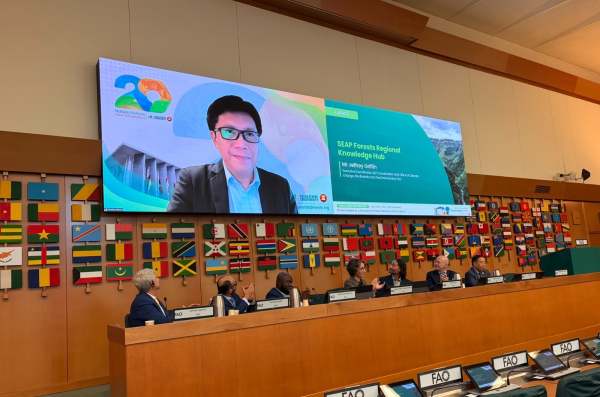
Primary forests across Southeast Asia and the Pacific hold biodiversity and carbon stocks that cannot be replaced once gone. They regulate the water supplies that agriculture depends on, underpin food security and climate-resilient rural development, and sustain the livelihoods and cultural identity of Indigenous Peoples and local communities. Yet land-use change, infrastructure expansion and climate change continue to put them at risk. According to the Global Forest Resources Assessment 2025, primary forests cover 1.18 billion hectares worldwide, around 29 percent of all forests. Their loss has slowed, but 1.61 million hectares were still lost each year between 2015 and 2025.
A new knowledge hub bringing together data, research and country experience on Southeast Asia and the Pacific's primary forests was launched today during World Forestry Week, alongside the 28th Session of the Committee on Forestry (COFO 28), giving governments, practitioners and Indigenous Peoples' organizations across the ten countries it covers the evidence base to inform forest policy and conservation decisions.
Much of the knowledge needed to protect these forests already exists: in scientific research and monitoring data, in the knowledge and stewardship practices of Indigenous Peoples and local communities, and in the practical experience of forest agencies and field practitioners. But it takes many forms and is scattered across institutions, languages and formats.
The SEAP Forests Knowledge Hub brings this all together in one place as a regional public good, open to anyone working on or learning about the region's primary forests. Users can explore a regional overview of primary forests, interactive maps and data visualizations, and a curated library of publications, tools, platforms and national strategies. By improving access to evidence and practical experience, the Hub can help inform policies, programs and investments for the conservation and sustainable management of primary forest landscapes.
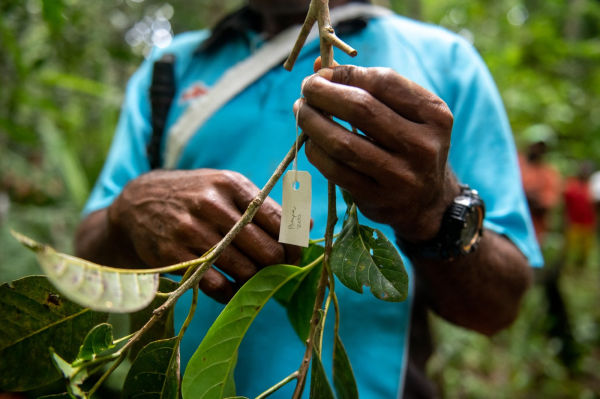
The photo of the woman from Cambodia is © FAO/ Pisey Khun, and the photo of the hand is ©FAO/Cory Wright.
Available at seap-forests.org, the Hub was developed under the GEF-8 Southeast Asia and the Pacific Forests Integrated Program (SEAP Forests IP), supported by the Global Environment Facility and co-led by the Food and Agriculture Organization of the United Nations (FAO) and the International Union for Conservation of Nature (IUCN), with the ASEAN Centre for Biodiversity as a key technical partner of the Hub. It features the program's own work at the regional level, such as baseline reports, policy briefs, and events. It also shares what the program's country projects in Lao PDR, Papua New Guinea and Thailand are learning on the ground.
"Primary forests are among the region’s most valuable assets. They sustain biodiversity, support resilient agrifood systems and provide benefits that communities and economies depend upon. Through the SEAP Forests Knowledge Hub, countries and partners can access and share the evidence and experience needed to support the conservation and sustainable management of primary forest landscapes," said Sheila Wertz-Kanounnikoff, Senior Forestry Officer and Module Leader for Forestry and Biodiversity, FAO Regional Office for Asia and the Pacific.
"This Hub puts the region's forest knowledge into the hands of the people making decisions on the ground – from national forest agencies to Indigenous Peoples' organizations. That's what will strengthen primary forest conservation across Southeast Asia and the Pacific," said Satrio Wikansono, Regional Coordinator, Forests and Drylands, IUCN Asia.
"The SEAP Forests Knowledge Hub gives the countries of the region a shared resource, and it opens a channel for exchange with the other Critical Forest Biomes programs in the Amazon, the Congo Basin, Mesoamerica and West Africa," said Pascal Martinez, Senior Environmental Specialist and Forests and Wildlife Lead, Global Environment Facility.
KPL

