KPL
The Ministry of Health, in partnership with the United Nations Population Fund (UNFPA), is marking World Contraception Day 2026 through a series of activities aimed at bringing family planning information and services closer to people and promoting the right of every individual to make informed and voluntary choices about their reproductive lives.
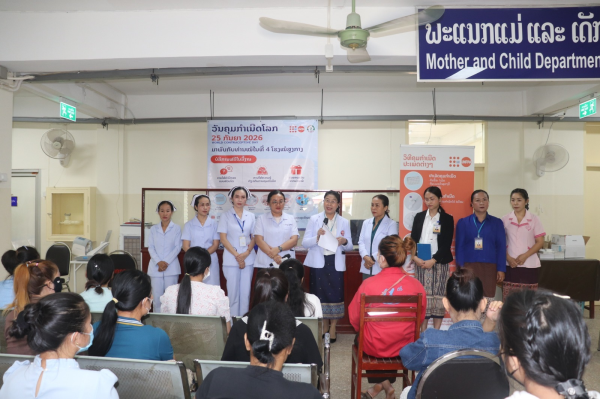
Rather than a one-day event, this year’s campaign mobilizes health facilities, healthcare providers, volunteers, young people and communities to raise awareness of modern contraceptive methods, address misconceptions and barriers to their use, and connect women, adolescents and couples with quality family planning information and services. Activities are being implemented in collaboration with hospitals and health facilities, complemented by community outreach, volunteer engagement and youth-focused communication.
The campaign reinforces a simple principle: everyone should be able to decide freely and responsibly whether and when to have children and have access to the information and range of contraceptive options needed to make those decisions.
Access to voluntary, rights-based family planning contributes not only to better health outcomes but also to broader opportunities for women, girls, families and communities. Preventing unintended pregnancies can reduce maternal health risks, support girls to remain in education and allow women greater opportunities to participate in economic and social life.
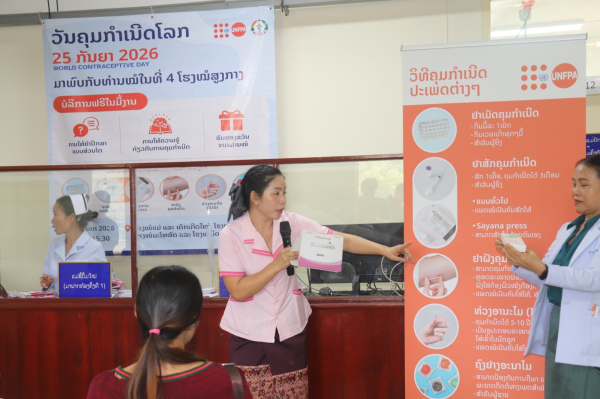
Family planning is therefore not only about the availability of contraceptive commodities. Meaningful reproductive choice requires accurate information, respectful counselling, confidentiality, affordable and accessible services, a reliable supply of contraceptive methods and the ability to make decisions free from coercion, discrimination and judgment.
In Lao PDR, persistent inequalities mean that access and decision-making remain uneven. Young people, people living in remote areas, ethnic communities and persons with disabilities can face additional barriers to obtaining sexual and reproductive health information and services. Addressing these gaps requires services that respond to people’s different circumstances and needs, while ensuring that no one is excluded because of age, disability, location, marital status or economic situation.
Dr Phayvanh Keopaseuth, Vice Minister of Health, highlighted the importance of sustaining efforts to ensure equitable access to voluntary family planning services across the country:
“Under our reproductive, maternal, newborn, child and adolescent health priorities, we want quality family planning services to be available closer to where people live. That means ensuring contraceptives are consistently available at health facilities, strengthening the skills of health workers, expanding youth-friendly services and reaching communities that still have difficulty accessing care. Family planning is an essential part of improving maternal health, preventing unintended pregnancies and giving women and young people more choices for their future”.
The national data from the Lao Social Indicator Survey III (LSIS III) demonstrates both important progress and continuing disparities in contraceptive access and decision-making. While the use of modern contraception and the proportion of demand satisfied have improved, unmet need remains particularly significant among some groups, including adolescents and unmarried women. Geographic, socioeconomic and other inequalities also continue to influence whether people are able to obtain services and exercise reproductive choice.
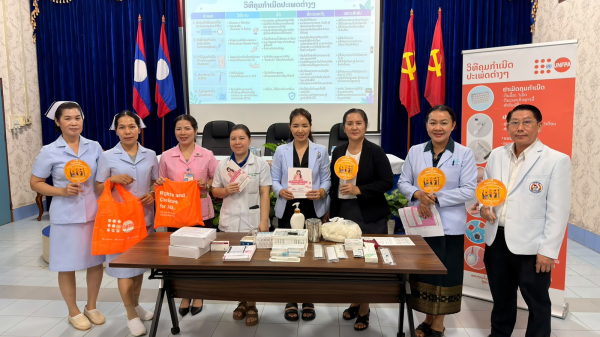
These inequalities are closely linked to wider challenges affecting adolescents and young women. Child marriage, adolescent pregnancy, interrupted education and limited economic opportunities can reinforce one another. Strengthening comprehensive sexuality education, adolescent- and youth-friendly health services and community-based information is therefore an important part of enabling young people to make informed decisions and access care when they need it.
A particular focus of the 2026 campaign is reaching people through the health system itself. Four central hospitals (Mahosot, Friendship, Mother and newborn and Setthathirat) and other service delivery points, in addition to regular visits to factories provide opportunities not only to offer contraceptive methods, but also to provide confidential counselling, explain the range of available options, correct misinformation and support each person in choosing a method appropriate to their needs and preferences.
Volunteers and community-based actors complement this work by bringing information closer to communities, encouraging dialogue around family planning and referring people to appropriate health services. Their engagement is especially important for reaching people who may not routinely seek information from formal health facilities and for addressing stigma or misconceptions that can prevent people from accessing contraception.
The campaign also emphasizes disability inclusion and the need to make sexual and reproductive health information and services accessible to persons with disabilities.The mobile van of Vientiane Women Youth Center (VWYC) visited the networks of persons with disabilities to offer counseling and access to contraception when desired.
After I gave birth, I started thinking much more seriously about family planning. I wanted to understand what choices were available to me and which method would be right for my body and my situation. As a young woman with a disability, I also need health workers to take the time to explain things clearly and speak directly to me, so I can make my own decision. Having access to the right information and support gives me more confidence to plan for my health, my family and my future,” said Ms. Lanee, from Xonpao group.
Dr. Bakhtiyor Kadyrov, UNFPA Representative to the Lao PDR, emphasized that expanding access to family planning is a human right and a strategic investment:
“Family planning is one of the most effective investments a country can make in people. An investment analysis supported by UNFPA demonstrates the wider value of investing in family planning. It estimates that every US dollar invested can generate around US$33.6 in benefits to families and society. But investment must translate into real choices: contraceptive methods must be available, information must be accurate, services must be respectful and individuals must be able to make their own decisions without discrimination or coercion. Removing these barriers is fundamental to protecting rights and enabling women, adolescents and families to plan their futures.”
These benefits reinforce the importance of sustained investment in contraceptive commodities, trained health workers, quality counselling, youth-friendly services and strong supply systems. They also underline the need to invest in the less visible dimensions of access: accurate information, trust, confidentiality, informed choice and the removal of social and institutional barriers.
KPL

