KPL
On April 14, 2026, on the 12th day of the waning moon of the 5th lunar month (B.E. 2568), the Luang Prabang city administration, in collaboration with provincial authorities, organized the "Lo Lat" a massive traditional public market fair—to celebrate the Lao New Year.
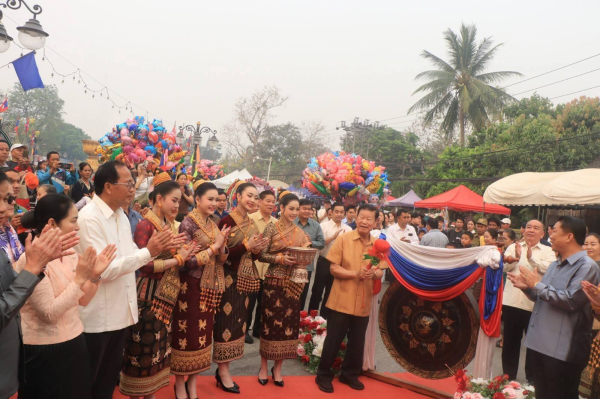
(KPL) On April 14, 2026, on the 12th day of the waning moon of the 5th lunar month (B.E. 2568), the Luang Prabang city administration, in collaboration with provincial authorities, organized the "Lo Lat" a massive traditional public market fair—to celebrate the Lao New Year.
The market stretched along the city's main thoroughfare, from the Choumkhong intersection to the That Luang field intersection.
Merchants from the local area, neighboring provinces, and abroad joined residents of Luang Prabang to display and sell a vast array of agricultural and handicraft products. The fair featured unique handmade items, traditional clothing, authentic Luang Prabang cuisine, and essential ceremonial items for New Year rituals.
Distinguished Guests and Atmosphere
The event was attended by Mr. Somsavat Lengsavad, former high-ranking leader, along with current and former provincial and city officials. A large crowd of domestic and international tourists joined the festivities, creating a vibrant and joyful atmosphere. Visitors expressed great admiration for the craftsmanship and the unique local identity reflected in the agricultural and handmade products on display.
A Twice-Yearly Tradition
The "Lo Lat" or mass public market in the World Heritage City is a significant tradition held only twice a year with the first one held during Lao New Year (Pi Mai Lao) and another one during Boun Hor Khao Padap Din (Boat Racing Festival in the 9th lunar month).
Animals for merit-making: Various animals were sold for people to release (symbolizing the freeing of life) as part of religious rituals during the transition of the "Sangkhan" (the passing of the old year and arrival of the new).
In the afternoon of the same day, government leaders and the general public crossed the river to participate in the Building of Sand Stupas at Don Say Moungkhoun in Chomphet District.
In addition to the market and the sand stupas, other key cultural activities included the ceremonial Water Collection by Pou Yer Ya Yer (the guardian spirits of Luang Prabang) and the bathing of Buddha images (Song Phra) at various temples throughout the city, where sacred statues are brought down for the public to pour scented water over them
KPL

