Philippines adjusts school calendar to avoid heat

23/05/2024 08:56
Email Print 8078
KPL (KPL/VNA)Philippine President Ferdinand Marcos Jr. on May 21 approved a proposal to end the school year 2024-2025 on April 15 - a schedule that allows for basic education schools to gradually revert to the old calendar without holding Saturday classes to meet the required number of school days.
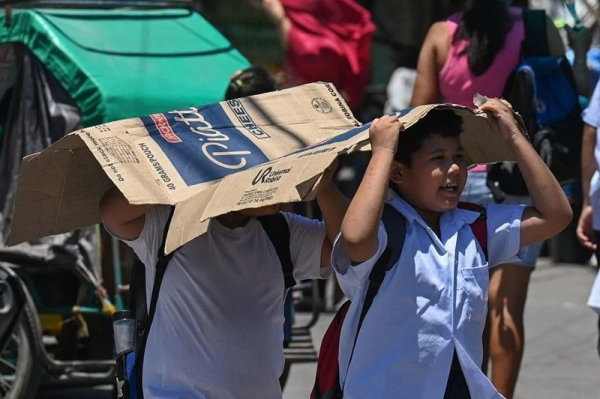
(KPL/VNA)Philippine President Ferdinand Marcos Jr. on May 21 approved a proposal to end the school year 2024-2025 on April 15 - a schedule that allows for basic education schools to gradually revert to the old calendar without holding Saturday classes to meet the required number of school days.

The approved proposal retains the July 29 start of classes and pushes back the end of classes about a month earlier than originally planned by the Department of Education (DepEd).

The Presidential Communications Office (PCO) said in a press release that this will start the country's gradual return to the old June-March school calendar, which students and teachers have been clamoring for after extreme temperatures driven by climate change forced thousands of schools to suspend in-person classes in April and May.

Prior to this, Vice President and DepEd Secretary Sara Duterte presented the president with two proposed calendars for SY 2024-2025 after consulting teachers, school officials and parents.

The first proposal included 182 days, with 15 Saturdays requiring in-person attendance. The second option proposed a shorter 167-day school year, eliminating Saturday classes altogether. Both plans scheduled the end of classes on March 31, 2025.

According to the office, Marcos expressed reservations about a 167-day school year due to its possible negative impact on student learning due to reduced classroom time.

Marcos said he also had concerns about student well-being and the additional resources required to hold Saturday classes.

KPL

ຂ່າວອື່ນໆ

    • More than 400 Indonesians released from Cambodian scam networks World News

      More than 400 Indonesians released from Cambodian scam networks

      1/22/2026 2:18:07 PM

      (KPL/VNA) Indonesian Ambassador to Cambodia Santo Darmosumarto has announced that 440 Indonesians were freed by cyberscam networks in Cambodia from January 1 to 18, after Phnom Penh announced a fresh crackdown following the arrest of an alleged boss of the illicit industry.

    • SK bioscience to speed up Ebola virus vaccine development with CEPI funding World News

      SK bioscience to speed up Ebola virus vaccine development with CEPI funding

      1/22/2026 2:15:01 PM

      SK bioscience Co., a biopharmaceutical arm of Republic of Korea’s SK Group, said Thursday it will accelerate the development of a Zaire Ebola virus vaccine with funding from the Coalition for Epidemic Preparedness Innovations (CEPI).

    • Cuban government riaffirms gratitude to China for rice donation World News

      Cuban government riaffirms gratitude to China for rice donation

      1/22/2026 2:11:04 PM

      Cuba’s Foreign Minister, Bruno Rodriguez, thanked China today for the arrival of a first batch of rice as part of the aid from the Asian giant to the island.

    • Commercial spaceflight fuels China’s space exploration effortsWorld News

      Commercial spaceflight fuels China’s space exploration efforts

      1/21/2026 3:22:11 PM

      Recently, China sent a Gravity-1 carrier rocket into space from waters off the coast of Haiyang, east China’s Shandong province, placing three satellites into their designated orbits. This launch exemplifies the growing momentum of China’s emerging commercial space sector, which is contributing significantly to the country’s space exploration capabilities.

    • Shared Borders, Shared FuturesWorld News

      Shared Borders, Shared Futures

      1/21/2026 2:21:53 PM

      Peace doesn’t always fall apart because of distant rivals. Peace breaks down because neighbours stop talking. Borders are challenged, and trust chipped away. Small disagreements fester and become permanent. In a world full of global flash points, it’s often relationships between neighbouring countries that quietly decide whether a region moves forward or stays stuck. That idea sits at the centre of one episode in a podcast series I’ve been working on about global governance and a shared future for humanity. While preparing it, I kept noticing the same pattern: when neighbours choose dialogue over pressure and cooperation over rivalry, development follows. When they don’t, stability becomes fragile. That’s why wise leaders pay closer attention to regional partnerships, and why they matter so much for lasting peace.


Top
