KPL
Malaysia and the Lao PDR are looking to deepen their economic partnership by exploring new growth areas, including Muslim-friendly tourism, hospitality and the digital economy, as both countries commemorate the 60th anniversary of diplomatic relations this year.
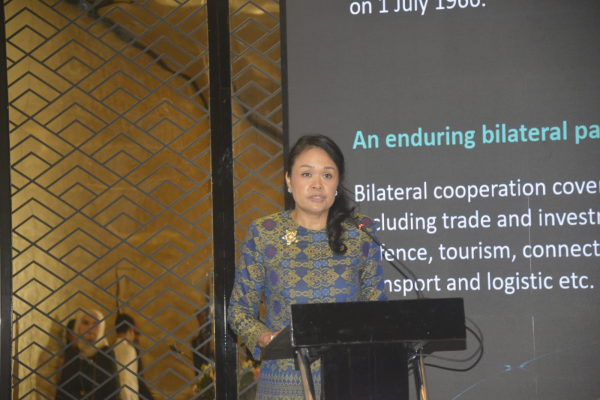
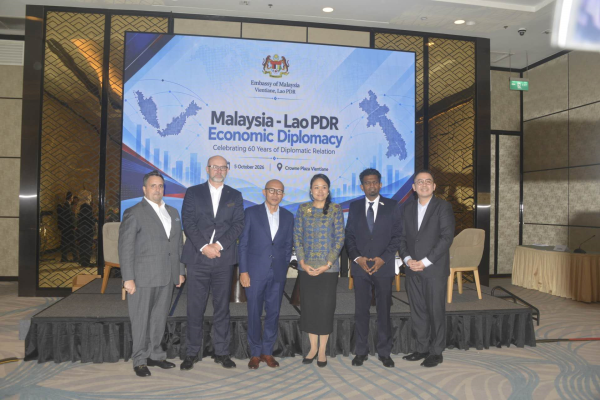
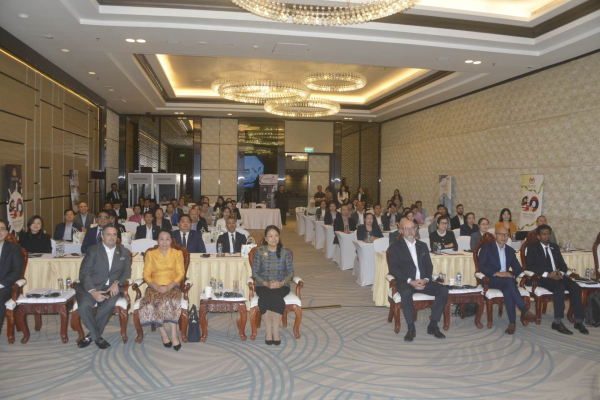
These opportunities were highlighted at the Malaysia–Lao PDR Economic Diplomacy Forum: Celebrating 60 Years Together, held at Crowne Plaza Vientiane, which brought together government representatives, industry leaders, tourism and hospitality players, diplomatic corps and international organisations, entrepreneurs and other stakeholders from both countries.
In her remarks, Ambassador of Malaysia to the Lao PDR, Norli Muadza Noor, highlighted the growing economic relationship between Malaysia and the Lao PDR. Malaysia currently ranks as the fourth-largest investor in the Lao PDR, with total investments of approximately USD946 million, encompassing sectors including banking, energy, hospitality, services and infrastructure.
Bilateral trade has also continued to expand, reaching more than USD65 million in 2025, compared with approximately USD43 million in 2024. Malaysia’s established presence in the Lao economy provides a strong foundation upon which both countries can explore new areas of commercial cooperation and encourage greater private-sector participation.
Tapping the Growing Muslim Travel Market
A key focus of the programme was the panel discussion, “Unlocking the Muslim Travel Market: Harmonising Halal Tourism Standards between Malaysia and the Lao PDR,” which explored the potential for the Lao PDR to tap into the rapidly expanding global Muslim travel market.
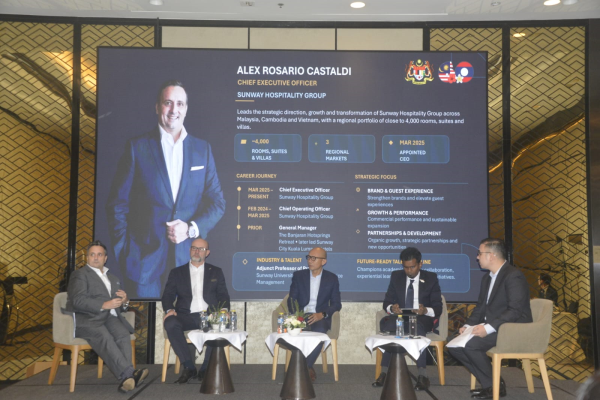
Muslim tourism represents an increasingly important segment of the global travel industry. According to figures highlighted during the programme, international Muslim traveller arrivals reached 196 million in 2025, representing an 11.3 per cent year-on-year increase, and are projected to reach 262 million by 2030, with annual travel expenditure estimated at approximately USD310 billion.
For the Lao PDR, this growing market presents an opportunity to diversify its tourism offerings and attract new groups of international visitors, complementing the country’s established strengths in cultural heritage, nature and Buddhist tourism.
The country’s strategic position in mainland Southeast Asia and improved regional connectivity, including through the Lao-China Railway, further strengthen this potential. During the first half of 2026, the Lao PDR received 2.935 million international visitors, while the railway recorded 244,000 cross-border passenger trips during the first eight months of the year, an increase of more than 50 per cent compared with the same period in 2025.
The discussion highlighted that developing Muslim-friendly tourism does not require changing the Lao PDR’s cultural identity or existing tourism strengths. Rather, it could add value to the country’s existing tourism ecosystem by making destinations and services more accessible and welcoming to a wider range of international travellers. Greater awareness of Muslim travellers’ needs, including access to halal food, prayer facilities and Muslim-friendly accommodation and services, could strengthen the Lao PDR’s ability to capture a share of this growing international market.
Malaysian Expertise Meets Lao Tourism Experience
The panel discussion brought together perspectives from both Malaysia and the Lao PDR, combining Malaysia’s established expertise in Muslim-friendly tourism with practical insights into the Lao tourism and hospitality landscape.
From Malaysia, Mr. Mohammad Faisal Abu Suaib Khan, Director-General of the Islamic Tourism Centre (ITC), and Mr. Alex Castaldi, Chief Executive Officer of Sunway Hotels & Resorts, shared Malaysia’s experience in developing and serving the Muslim-friendly tourism and hospitality market. Their participation reflected two complementary dimensions of Malaysia’s experience: the institutional and capacity-building perspective represented by ITC, and the practical hospitality and private-sector perspective represented by Sunway Hotels & Resorts.
Malaysia has developed considerable expertise in Muslim-friendly tourism through institutional frameworks, industry standards, training, capacity building and hospitality services. The discussion highlighted how relevant elements of this experience could be shared with the Lao PDR and adapted to local conditions rather than simply replicating Malaysia’s model. Potential areas of cooperation include capacity building, training for tourism and hospitality personnel, knowledge exchange, development of Muslim-friendly services, sharing of relevant standards and guidelines, destination readiness and business-to-business partnerships.
Importantly, the panel also provided a strong Lao perspective on how such cooperation could respond to the country’s own tourism priorities and industry realities.
Mr. Inthy Deuansavanh, President of the Lao Association of Travel Agents, provided insights into the development and potential of the Lao tourism sector. He highlighted the Lao PDR’s rich cultural and natural attractions, together with improving regional connectivity, as important assets in strengthening the country’s position as an international tourism destination. His perspective reinforced the potential for the Lao PDR to diversify its source markets and tourism offerings, including by developing greater readiness to receive Muslim travellers.
From the hospitality industry perspective, Mr. Cy West, Manager of Crowne Plaza Vientiane, shared the hotel’s practical experience in accommodating Muslim guests and providing Muslim-friendly services. The hotel’s experience demonstrated that responding to the needs of Muslim travellers can be incorporated within an international hospitality environment in the Lao PDR while continuing to cater to travellers from diverse cultural and religious backgrounds.
The Lao perspectives were particularly important in demonstrating that Muslim-friendly tourism is not solely a concept being introduced from Malaysia. There are already awareness and practical experience within the Lao hospitality sector that can be further developed through collaboration, training and knowledge exchange.
Taken together, the four panellists demonstrated the complementary strengths that Malaysia and the Lao PDR could bring to this emerging area of cooperation. Malaysia can offer experience, technical knowledge, institutional frameworks and established hospitality practices, while Lao stakeholders contribute local market knowledge, tourism assets and an understanding of what approaches would be practical and appropriate within the country. This creates the basis for a partnership focused on co-developing approaches suited to the Lao tourism landscape.
Building Greater Awareness and Collaboration
In conclusion, the panel agreed that greater awareness of Muslim-friendly tourism needs to be developed across the Lao PDR’s tourism sector. While there is already practical experience within parts of the hospitality industry, further understanding of the needs and expectations of Muslim travelers will be important in ensuring that the country is well prepared to welcome this growing international market.
The discussion also underscored that developing Muslim-friendly tourism should be a collaborative effort involving all stakeholders. Government institutions, tourism authorities, local communities, tourism and hospitality businesses, travel agents, hotels and other private-sector partners all have an important role to play. Stronger cooperation between the public and private sectors will be essential to raise awareness, strengthen capacity, develop appropriate services and ensure that approaches are practical and suited to the Lao PDR’s tourism landscape.
Rather than creating a separate tourism model, the objective is to build on the Lao PDR’s existing strengths while making its destinations and services more accessible and welcoming to Muslim travelers. Importantly, the panel stressed that dialogue must translate into tangible outcomes — from greater awareness and capacity building to practical improvements in services, facilities and industry readiness. Continued cooperation between government and the private sector, supported by knowledge exchange with Malaysia, will be key to turning shared ideas into practical action.
From Tourism Cooperation to Wider Business Opportunities
The potential economic benefits could extend beyond tourism. Malaysia already has a significant commercial and investment presence in the Lao PDR. Its position as the country’s fourth-largest foreign investor, coupled with investments in banking, energy, hospitality, services and infrastructure, provides an established economic foundation from which new areas of cooperation could develop.
Malaysia also has an established banking presence in the Lao PDR, including Public Bank, RHB and Maybank. This wider financial and commercial ecosystem could potentially support stronger business linkages between Malaysian and Lao enterprises as new sectors develop.
As the Lao PDR strengthens its Muslim-friendly tourism ecosystem, opportunities could emerge for Malaysian SMEs and service providers with expertise in tourism, hospitality, training, food and beverage, Muslim-friendly services and related industries to explore partnerships with Lao businesses. Similarly, Lao SMEs could benefit from knowledge exchange, capacity building, partnerships and greater exposure to Malaysia’s tourism and business ecosystem.
Expanding Cooperation into the Digital Economy
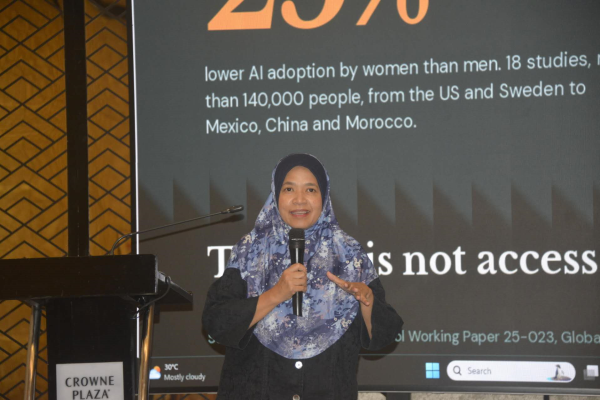
The programme also featured a knowledge-sharing session on “AI and the Future of Women Entrepreneurship,” highlighting another emerging dimension of Malaysia–Lao PDR economic cooperation. Dr Nuraizah Shamsul Baharin, CEO and Founder of MADCash and focal point for the ASEAN Women Entrepreneur Network (AWEN), shared insights into how artificial intelligence and digital technologies can support women entrepreneurs and MSMEs by strengthening business operations, improving digital presence, reaching wider markets and enabling greater participation in the digital economy.
The discussion highlighted that the benefits of AI extend beyond emerging technology applications. Participants noted that a better understanding of local culture and business environments remains important for strengthening cross-border business relationships, while AI can complement this understanding by supporting businesses across a wide range of functions, including business management systems, accounting, marketing, networking and access to information.
Participants also drew parallels between the promotion of tourism and the adoption of AI. Just as greater awareness and promotion are needed to showcase the Lao PDR as a tourism destination, businesses and entrepreneurs also need greater awareness of how AI tools can be applied practically to improve their competitiveness. One participant suggested that this could provide an opportunity to combine the Lao PDR’s tourism strengths as a form of soft power with AI as an enabling technology, creating practical digital tools that can help promote destinations, connect businesses with markets and enhance the overall visitor and business experience.
The exchange demonstrated that AI can serve not only as a technology for individual businesses, but also as a potential enabler of wider economic and tourism development. By combining the Lao PDR’s cultural and tourism assets with appropriate digital technologies, there is potential to create new platforms, services and business opportunities that connect local entrepreneurs with regional and international markets.
Together, the two sessions demonstrated how Malaysia–Lao PDR economic relations can expand beyond traditional areas of trade and investment into new sectors with significant future potential. As Malaysia and the Lao PDR mark 60 years of diplomatic relations, the programme underscored a forward-looking approach to the partnership — leveraging Malaysia’s experience and established economic presence while drawing upon the Lao PDR’s tourism assets, growing connectivity and local industry experience.
Ultimately, the initiative reflected a shared objective: to transform six decades of friendship between Malaysia and the Lao PDR into practical and mutually beneficial economic opportunities for businesses and communities in both countries. The discussions also pointed towards a broader opportunity for cooperation — bringing together people, culture, tourism and technology to create new pathways for inclusive and sustainable economic growth.
KPL

