KPL
Following severe flooding triggered by Typhoon Maysak that devastated parts of Luang Namtha Province on 30–31 August 2026, more than 24,800 people across five districts were affected, with nearly one-quarter (23.4%) of all villages in the province experiencing significant impacts.
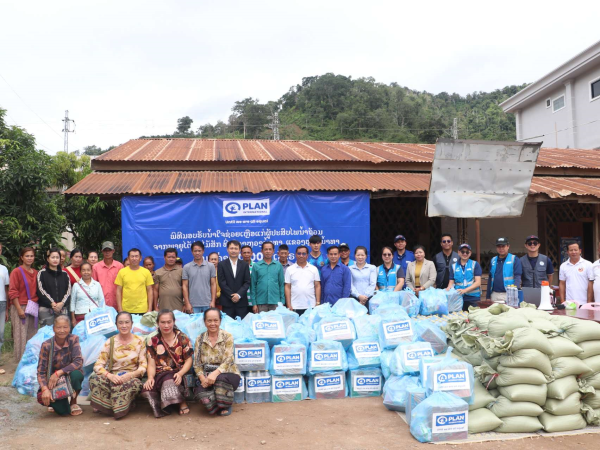
Initial government and humanitarian assessments indicate that 24,849 people—including 1,654 displaced students—have been impacted by widespread severe flooding. Torrential downpours destroyed 12 homes and severely damaged hundreds more, submerged classrooms across 29 schools, cut off municipal drinking water networks, ruined 35 rural gravity-fed water supply systems, and heavily damaged agricultural land and critical infrastructure. The crisis is particularly acute for girls and young women, who face heightened risks of gender-based violence (GBV), disrupted schooling, and severe menstrual hygiene challenges during displacement.
In response, Plan International Laos is supporting the government-led response through an emergency relief initiative focused on food, clean water, and Sanitation & Hygiene (WASH) distributions to 500 impacted households includes 2,258 people (1,064 women) in Luang Namtha District.
"Children and girls are among the most vulnerable during emergencies, but recovery requires support for the whole family," said Mr. Quang Gia Tran, Office-in-Charge for the Country Director, Business Development Manager at Plan International Laos. "This disaster has disrupted access to clean water, healthcare, education, and other critical services for thousands of people. Plan International Laos is mobilizing resources to ensure life-saving support reaches the hardest-hit children, families, and communities as quickly as possible."
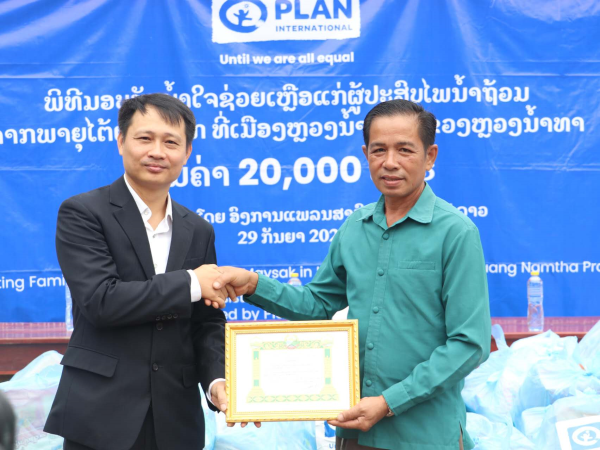
Coordinating closely with the Provincial Disaster Management Committee, Provincial Department of Labour and Social Welfare and the Ministry of Labour and Social Welfare, Plan International Laos is deploying life-saving assistance that values EUR 20,000. Emergency response efforts include both food and non-food items distribution, specifically essential food, safe drinking water, and hygiene kits, including menstrual hygiene materials for women and girls, to flood-affected communities. Hygiene promotion campaigns are expected to reach approximately 15,000 people through social media platforms. Protection, Gender and Inclusion (PGI), child protection, and GBV prevention measures will be integrated throughout the response, complemented by post-distribution monitoring to strengthen accountability and ensure assistance met community needs. Plan International calls on local and international donors to urgently support ongoing emergency relief operations as humanitarian needs continue to escalate across northern Laos.
"We must act swiftly not only to meet basic survival needs, but to protect the rights and dignity of young girls and children throughout this crisis," added Mr. Quang Gia Tran.
KPL

