KPL
The government has intensified efforts to control inflation by adopting more restrictive monetary policies.
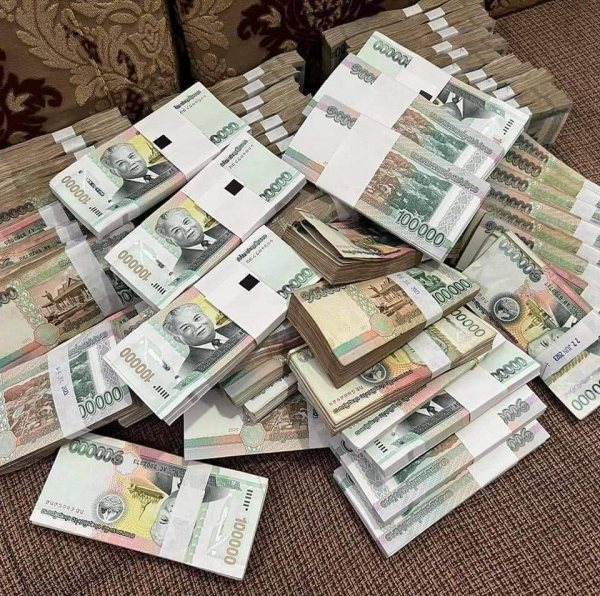
(KPL) – The government has intensified efforts to control inflation by adopting more restrictive monetary policies. Prime Minister Sonexay Siphandone presented the updated economic growth forecast at the 8th Ordinary Session of the 9th Legislature of the National Assembly, which began on November 18.
In his address, the Prime Minister highlighted several measures aimed at curbing inflation, including tighter monetary policies, an enhanced exchange rate management mechanism to prevent volatility, and initiatives to regulate foreign currency flows into the banking system. The government is also exploring a price control system and utilizing trade policies to limit imports of luxury goods, such as vehicles valued at $50,000 or more. Additionally, stringent measures have been implemented to combat illegal trade.
These efforts have yielded notable results. The 10-month average inflation rate for 2024 stands at 24.4%, with projections to drop below 20% by year-end—significantly lower than the 31.23% average inflation rate recorded in 2023. Exchange rate stability has also improved.
To regulate the money supply, particularly the kip component (M2), the government has focused on maintaining appropriate liquidity levels. This has been achieved through the Bank of the Lao PDR’s (BOL) use of reference interest rates, bond issuance, and centralization of treasury accounts at the BOL. Consequently, M2 growth slowed to 22.13% in October 2024 and is expected to remain below 25% by year-end.
The government has taken steps to increase foreign exchange reserves, requiring exporters to transfer foreign currency earnings to Lao banks. To date, 4,012 import-export businesses have registered for compliance, including 733 import companies, 528 export companies, 2,523 import-export companies, and 228 service companies. Additionally, a cross-border payment system has been established to channel income from labor and tourism, with more than 70% of export earnings now routed through the banking system.
The commercial banks' deposit balance now stands at 98.60% of GDP, surpassing the National Assembly’s target of 85%. Meanwhile, the banking sector’s credit balance is 64.18% of GDP, on track to meet the target of 65% by the end of 2024.
Prime Minister Sonexay detailed three main strategies for exchange rate stabilization including enhancing the exchange rate setting mechanism, establishing the Liquid Foreign Exchange Market (LFX), a joint venture between the BOL and 11 commercial banks and strengthening the regulatory framework for gold banks, precious metal shops, and related entities.
These measures are projected to reduce the depreciation of the kip against the dollar from 23.46% in 2023 to 13% in 2024. Furthermore, the exchange rate gap between commercial banks and the informal market, which exceeded 10% in early 2024, has narrowed to below 3% since September.
To stimulate economic growth and ensure equitable capital distribution, the government has emphasized targeted credit policies. Since November 2023, 44 projects have received credit support, including 15 in agriculture and forestry, 20 in tourism and trade services, and 9 in industry and handicrafts, with total loans amounting to 4.53 trillion kip. Additionally, 419 projects across 18 provinces have been approved for capital allocation, with 77.65% of the approved loans—valued at 587.59 billion kip—already disbursed.
KPL

