KPL
The National Assembly has called on the government to strengthen state revenue collection, improve public investment management and clarify investment policies as part of its review of the implementation of key national plans for 2026 and development priorities for 2027.
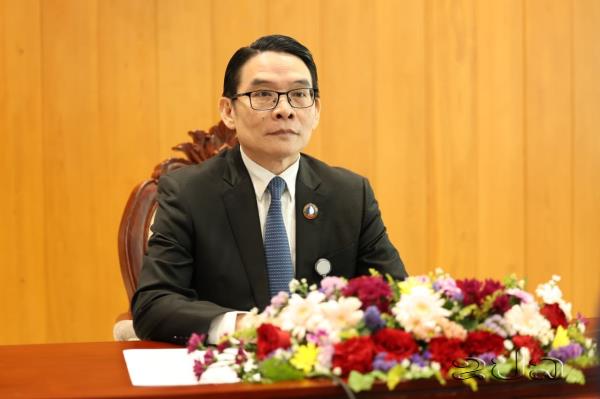 Mr. Vilayvong Bouddakham, Vice-President of the National Assembly, briefed the media on the outcomes of deliberations and approval of government reports on the National Socio-Economic Development Plan, State Budget Plan and Monetary Plan for 2026, as well as planning directions for 2027.He said National Assembly members had carefully reviewed the implementation of the plans, considered public concerns and raised issues requiring further government action. These included state revenue leakages, overloaded trucks, land leases and concessions, and mineral extraction. The Prime Minister provided explanations and pledged to address the concerns in accordance with the law.The Assembly commended the government’s efforts to maintain political stability and social order while achieving gross domestic product growth of 5.1 per cent despite fluctuations in the global economy.To strengthen public finances, the Assembly recommended modernising and expanding revenue collection systems, particularly to improve coverage of business entities. It also called for adequate funding for modernisation and stricter inspections of officials and authorised agencies at international border checkpoints.On public investment, the Assembly urged the government to strengthen oversight and financial discipline to ensure projects are completed as planned. It recommended reviewing delayed or stalled projects, particularly those of national importance, and investigating unauthorised project transfers and excessive increases in project values.The Assembly also raised concerns about the performance of investment promotion agencies and one-stop service centres, citing insufficient budgets and a lack of assigned personnel from relevant government sectors. It called for clearer investment policies, regulations and management responsibilities, including in designated investment zones, to improve services and facilitate investment.To boost agricultural production and reduce reliance on imports, the Assembly urged the government to provide greater support for commercial farming, strengthen links between production and supply chains, and improve transport infrastructure and market access. It also called for increased support for agricultural inputs and other production requirements to reduce dependence on imported supplies.Regarding land management, the Assembly recommended reviewing land lease and concession projects approved by central and local authorities that remain undeveloped, are not being used for their intended purposes, have overlapping approvals or negatively affect people's land and property.It also called for budget allocations to support the recognition and formalisation of land-use rights in forest areas, alongside decisive action against unauthorised encroachment, occupation and use of forest land.On mineral resources, the Assembly recommended assessing implementation of the Mineral Resources Strategy to 2030, including identifying minerals to prioritise for extraction, those whose extraction should be prohibited or restricted, and reserves that should be conserved.The recommendations are intended to improve public financial management, strengthen investment governance, promote domestic production and ensure more effective use of national resources as Laos prepares its development priorities for 2027.
KPL

