KPL
A significant step towards protecting Laos's rich biodiversity and natural heritage has been taken with the signing of a Memorandum of Understanding (MoU) between the Department of Forestry, the Ministry of Agriculture and Environment and WWF-Laos to implement the Nong Kham Saen Wetland Management Project for Biodiversity Conservation and Ecosystem Restoration.
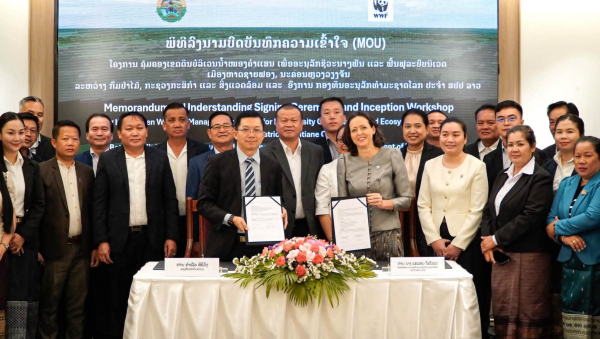
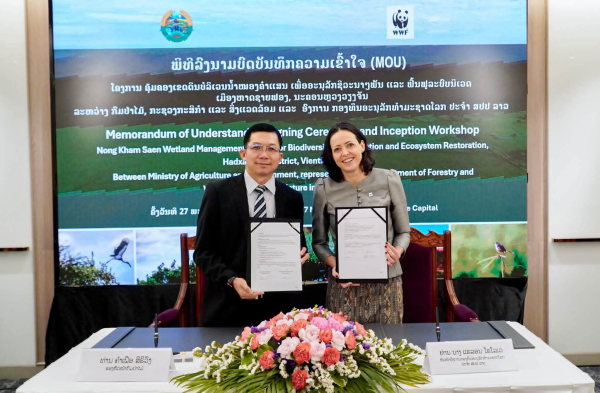
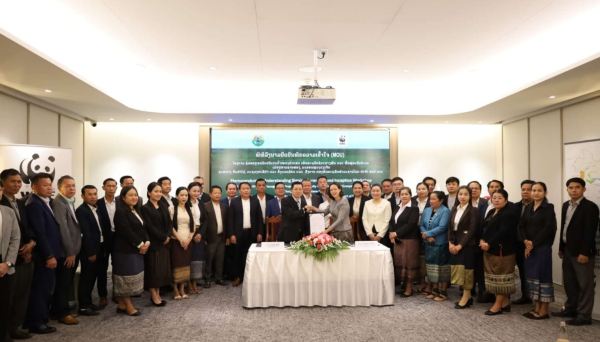
The MoU was signed by Mr. Khamfeua Sirivong, Deputy Director General of the Department of Forestry and Ms. Heron Holloway, Country Director of WWF-Laos, in November 2026. Representatives from all six villages surrounding the wetland, together with local authorities and project partners, attended the signing ceremony, demonstrating a shared commitment to safeguarding this important natural area.
Covering approximately 103 hectares across six villages in Hadxayfong District, Vientiane Capital, the project will run until December 31, 2028. It aims to conserve and restore the wetland's ecosystems, protect its biodiversity, and strengthen the capacity of local communities to sustainably manage and use natural resources.
Speaking at the signing ceremony, Mr. Khamfeua Sirivong highlighted the importance of Nong Kham Saen, describing it as a wetland rich in biodiversity and a place of deep cultural and spiritual significance. For generations, it has been regarded as a sacred place of worship by the people of Vientiane Capital.
Beyond its cultural value, Nong Kham Saen is also an important habitat for wildlife. More than 175 bird species have been recorded in and around the wetland, highlighting its ecological importance and the need for long-term conservation efforts.
The project brings together the Ministry of Agriculture and Environment, through the Department of Forestry, WWF-Laos, Vientiane Capital and district authorities, as well as communities from the six surrounding villages. This collaborative approach aims to ensure that conservation efforts are supported by local participation and shared responsibility.
The project will conduct biodiversity surveys to better understand the wetland's ecological value, while restoring forest and wetland habitats. Activities will include protecting existing trees and vegetation, restoring degraded areas, and planting new trees to strengthen the ecosystem and provide better habitats for wildlife.
A Nature Learning and Information Centre will be developed to provide environmental education, raise public awareness, and share information about the wetland's biodiversity. The centre will also support more effective management and conservation planning.
The project will strengthen the capacity of the Joint Management Committee and local communities in wetland management and biodiversity conservation. At the same time, it will support appropriate livelihood opportunities that enable local residents to benefit from natural resources sustainably while protecting the environment.
One of the project's longer-term ambitions is to enhance the status of the Nong Kham Saen Biodiversity Conservation Area and work towards its potential recognition as an ASEAN Heritage Park.
With more than 175 bird species already recorded in the area, Nong Kham Saen has important ecological value that could contribute to regional biodiversity conservation efforts.
Through the partnership between the Department of Forestry, WWF-Laos, local authorities, and the six surrounding communities, the project seeks to establish a sustainable model of wetland management that balances biodiversity protection, cultural preservation, and community development.
The initiative also highlights the important role local communities play in protecting natural heritage. By combining scientific research, habitat restoration, environmental education, and community engagement, Nong Kham Saen has the potential to become an important example of collaborative conservation in Laos.
Protecting Nong Kham Saen means protecting more than a wetland. It means safeguarding wildlife, preserving cultural heritage, and creating a sustainable natural legacy for future generations.
KPL

