KPL
Laos and the Republic of Korea are strengthening agricultural cooperation through the introduction of artificial intelligence (AI) technology in livestock farming, aiming to improve animal health monitoring, breeding management, and farm productivity.
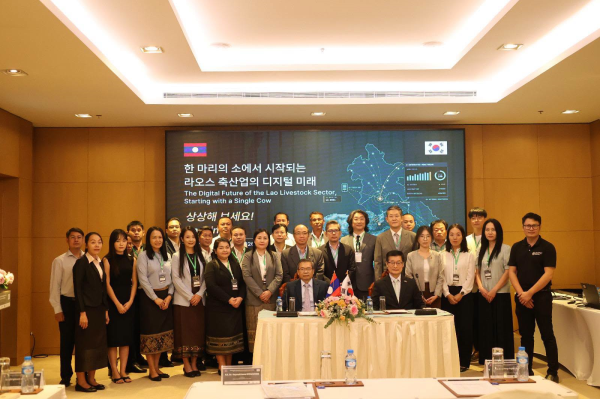
The initiative is being implemented through Laos’ first AI-powered livestock management pilot project, launched in July 2026 by Korean company Wibis in partnership with the National Agriculture and Forestry Research Institute (NAFRI) and local cooperatives. The project receives support from the Korea Trade-Investment Promotion Agency (KOTRA), the National IT Industry Promotion Agency (NIPA), and the Global Digital Innovation Network (GDIN).
A project results-sharing and user training ceremony was held in Vientiane on November 24, attended by Vice Minister of Agriculture and Environment Xainakhone Inthavong, Republic of Korea Ambassador to Laos Jeong Yeop Lee, government representatives, researchers, development partners, and cattle farmers.
Speaking at the event, Wibis Chairman and CEO Seungbaek Jeong said the pilot project had registered 98 cattle using electronic ear tags equipped with Radio Frequency Identification (RFID) technology. AI-powered cameras had also detected 88 instances of cattle showing signs of heat, helping farmers identify the appropriate breeding period.
The project has additionally developed a mobile application in the Lao language and provided training to local personnel to ensure they can independently operate the system.
The technology enables farmers to monitor cattle behaviour, track animal health, identify breeding cycles, and make timely management decisions. These functions are expected to improve breeding efficiency and increase overall farm productivity.
Jeong proposed further cooperation to integrate the pilot project's results into national livestock policies, establish a working group involving relevant government agencies to oversee system operations and data management, and expand the initiative to additional pilot areas. The long-term goal is to establish a national digital livestock platform led by Laos.
Vice Minister Xainakhone said the project's results demonstrated AI's potential in animal health monitoring, behavioural tracking, disease diagnosis, and livestock feed management, supporting the government's digital transformation policy. He also called on NAFRI and the Livestock Research Centre to extend the technology's benefits to more farmers.
Ambassador Jeong Yeop Lee highlighted the potential of combining South Korea's digital technology expertise with Laos' agricultural strengths to promote sustainable economic growth and create mutual benefits.
Wibis also introduced FarmSeed, a solar-powered container farming system capable of producing up to 30,000 virus-free plant seedlings per production cycle.
Future cooperation aims to expand these technologies nationwide, improve livestock quality and disease control, increase farmers' incomes, and strengthen the competitiveness of Laos' agricultural sector in regional and international markets.
KPL

