KPL
What was once a flood-ravaged and impoverished settlement along China’s Huaihe River has today emerged as a nationally recognized model for rural revitalization and grassroots governance.
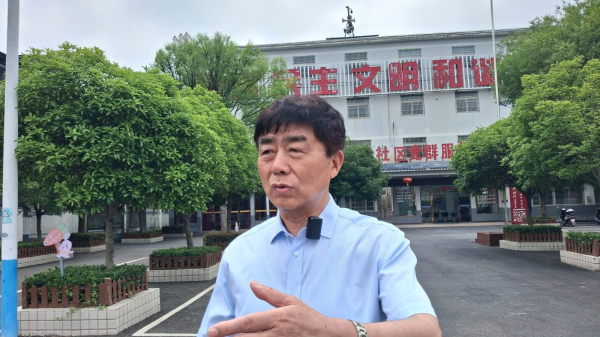
During a media tour on May 27, journalists from China and the Asia-Pacific region visited Baihang Community to observe how decades of rural reform, infrastructure modernization, and community-based governance transformed the area into a modern “Beautiful Countryside” demonstration site.
Located near West Lake in Xihu Town of Yingzhou District, Baihang Community now features landscaped public spaces, modern villas, integrated public services, and a diversified rural economy. Yet local officials say the community’s transformation began from conditions once marked by severe flooding, poverty, and social instability.
According to Yan Yongzhi, the turning point came on April 8, 2011, when Xi Jinping — then serving as China’s Vice President — visited the village during an inspection tour and emphasized the importance of accelerating rural reconstruction and revitalization efforts.
“President Xi encouraged us to complete our revitalization goals during the 12th Five-Year Plan period,” Yan recalled while briefing the visiting journalists.
At the time, local authorities estimated that relocating and restructuring the flood-prone settlement could take up to 16 years. However, through accelerated implementation, the core transformation was completed within eight years.
Historically, the area was known locally as “Guodizi,” or “the bottom of the pot,” due to its low-lying geography along the Huaihe River basin. Seasonal flooding repeatedly damaged farmland and homes, contributing to chronic poverty and social disputes.
To address these challenges, local authorities merged 17 scattered villages and 27 village groups into a single centralized community. Former residential areas vulnerable to flooding were redeveloped and integrated into the surrounding West Lake ecological zone.
In 2016, Baihang Village was officially renamed Baihang Community to reflect its expanded urban-style public services and modernized infrastructure. The community now covers 6.5 square kilometers and is home to 956 households, or approximately 4,783 residents.
Journalists were also introduced to Baihang’s “Four Matters, Four Rights” grassroots governance mechanism, an approach inspired by China’s Fengqiao governance model. Under the system, community affairs and disputes are openly discussed through both online and offline consultations, while residents are guaranteed the rights to information, participation, decision-making, and supervision.
Local officials credit the governance framework with helping maintain social stability and community cohesion for more than 15 years. Baihang has since received numerous national and provincial honors, including recognition as a National Civilized Village and National Ecological Culture Village.
Economic diversification has also played a central role in the community’s development. Officials reported that annual per capita income has risen to more than 28,000 yuan, supported by agriculture, aquaculture, livestock production, and income from migrant workers employed in major Chinese cities.
To address the needs of an aging rural population, the community established the Joerong Elderly Service Center, a modern eldercare facility integrating healthcare, rehabilitation, and social services. The center has received provincial recognition as a smart elderly care demonstration facility within the Yangtze River Delta region.
Looking ahead, local authorities plan to further develop cultural and tourism industries linked to the nearby West Lake area. Future projects aim to incorporate Song Dynasty-inspired cultural elements while combining tourism with high-value agricultural development.
“What you see in Baihang is a reflection of China’s broader rural revitalization process,” Yan Yongzhi told journalists. “We hope more people from around the world can better understand the real transformation taking place in rural China.
KPL

