KPL
Before the end of the Indochina War, the sounds of gunfire from the invasion by imperialist colonialists still echoed in Laos. Yet, the two socialist countries, Laos and China, had already officially established diplomatic relations. This reflects their close, fraternal, and steadfast mutual support over many decades.
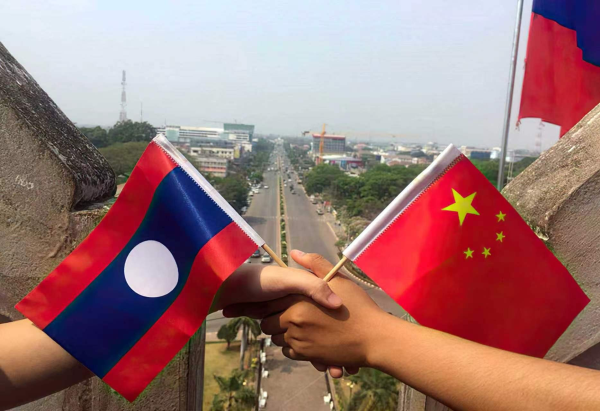
As this year marks the 65th anniversary of Laos-China diplomatic relations (25 April 1961 – 2026), it is a time to reflect on great achievements and to embark on a new journey towards even greater success for both nations. The relationship has evolved from a "Long-term Stable Comprehensive Strategic Partnership" following the "Four Goods" direction (good neighbors, good friends, good comrades, good partners) to a "Laos-China Community with a Shared Future."
Over all the 65 years of diplomatic ties, the relationship is not only a long period of time; it reflects tangible results of cooperation between Laos and China, growing continuously from generation to generation into a heritage, a fine tradition more valuable than "gold and silver." For many years, the United Nations frequently raised issues of poverty and Laos’ underdeveloped status on international forums, noting that Laos is one of over 40 landlocked countries in the world, posing difficulties for development.
The average income was less than 1 USD per person per day, and the problem of nearly 3 million tons of unexploded ordnance (UXO) from the war remained a threat and a challenge for Laos to escape poverty. Later, in 2021, the UN, World Bank, and Asian Development Bank all expressed congratulations and praised Laos as one of the 10 ASEAN member states with a rapidly growing economy, averaging 4%-5% per year or more.
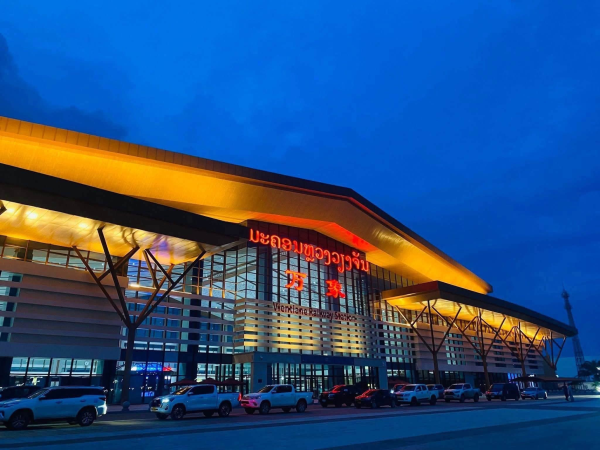
They noted Laos' active focus on human resource development and emphasis on developing high-quality infrastructure integrated and connected with the region and the world, especially the Laos-China railway. This has helped change history, elevating economic development, solving poverty, creating jobs, and improving the livelihoods of the multi-ethnic Lao people step by step.
When discussing the changes from the past to the present, we cannot overlook the background to the success jointly written by the two Parties and two States of Laos and China, a new history tied to many important and memorable achievements:
The "Golden Path"
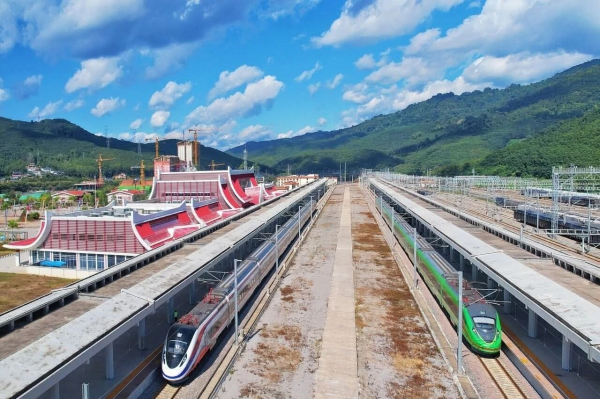
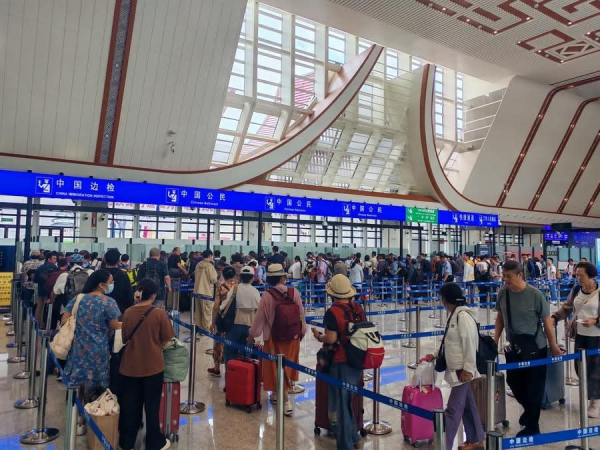
Transforming Laos' landlocked status into a land-linked hub connected regionally and internationally via the Laos-China railway. With a joint investment of nearly 6 billion USD under the Belt and Road Initiative (BRI), it has generated momentum for socio-economic development and paved the way for comprehensive progress. Since the official opening of the Laos-China railway over four years ago, it has transported over 70 million passengers and over 81 million tons of goods to 19 countries.
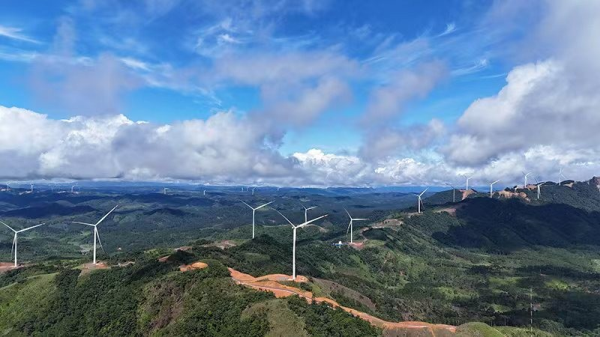
Turning UXO Areas into Green Energy
China has helped transform areas in northern and southern Laos, previously contaminated with unexploded ordnance from the Indochina War, into sources of environmentally friendly wind and solar energy to promote stable cross-border economic development. For instance, Power China has contracted to build a 600 MW wind power project in southern Laos, which is now completed and selling electricity to Vietnam. A solar power project by CGN is under construction, creating a multi-energy integration model. Coupled with the 500 kV Laos-China power grid interconnection project, Laos can export excess green hydropower during the rainy season and flexibly import power back from China during the dry season. After the project's completion in 2026, clean power transmission is expected to reach 3 billion kWh per year.
Chinese Investment
By 2025, Chinese investment in Laos increased to approximately 18-19 billion USD, covering over 900 projects. China has become the largest foreign investor in Laos (ranked 1st), followed by Vietnam (2nd), Thailand (3rd), and others.
Bilateral Trade
The trade value between the two sides in 2024-2025 reached 8.23 billion USD. Over 70 Lao products have been listed for export to China, including rubber, bananas, potatoes, watermelons, mangoes, corn, plums, long beans, vegetables, minerals, and others.
AI Cooperation
Laos and China have engaged in deep cooperation in Artificial Intelligence (AI), which has become a significant highlight of their strategic partnership, particularly under the Belt and Road Initiative (BRI). This cooperation extends from the central to local levels, encompassing national policy formulation, private sector collaboration, and applications in various sectors such as public health, trade, transport, telecommunications, and information.
Examples of cooperation between China's Guangxi Province and the Lao Ministry of Technology and Communications to promote the use of AI in smart cities, tourism, green energy, industry, and other fields. Examples of cooperation between China's Guangxi Province and the Lao Ministry of Technology and Communications to promote the use of AI in smart cities, tourism, green energy, industry, and other fields.
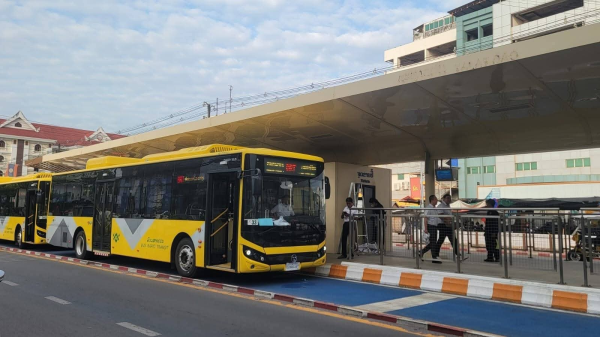
Chinese electric vehicles (EVs) are helping Laos reduce its trade deficit and break free from the control of the expensive, monopolistic fuel vehicle industry dominated by some Western nations. Furthermore, they are enabling Laos to pursue sustainable green development in line with the global policy of reducing air pollution.
According to technical data from the Lao Ministry of Industry and Commerce: Initially, in 2019, Laos imported only 8 electric vehicles. However, by 2022 that number reached 1,400 cars, in 2023 over 2,000 cars, in 2024 increased 8,000 cars and by 2025, the cumulative number of imported EVs is expected to reach over 12,000.
It is projected that by 2026, this figure could rise to 30,000-40,000 vehicles. This surge is due to Lao people facing fuel shortages and rising prices resulting from conflicts in the Middle East. Over 90% of these EVs come from China. This shift will allow Laos to save no less than 100-200 million liters of fuel per year. Moreover, it will not only help reduce the trade deficit but also effectively curb the outflow of foreign currency.
China is one of the top providers of educational development scholarships for the Lao people.
Currently, it is estimated that the number of Lao students studying in China may be as high as 30,000, an increase from the previous figure of approximately 10,000-20,000 in past years, representing a 10%-15% growth.
The trend of more Lao students choosing to study in China is driven by several factors: lower costs compared to developed countries; numerous teaching programs in Chinese-English and other languages; China's trusted role and influence on the international stage; a high-quality education system focused more on nation-building; being a good model for instilling discipline in students; receiving support from the Belt and Road Initiative cooperation framework; easier job opportunities after graduation due to the significant presence of Chinese investors in Laos; and convenient travel between the two countries thanks to the Laos-China railway and the opening of joint flight routes, among other reasons.
Nevertheless, Mr. Sonexay Siphandone, Prime Minister of Laos and one of the high-ranking leaders of the Lao PDR who once studied in the People's Republic of China, gave an interview to CMG (China Media Group) during the Boao Forum for Asia in 2025.
He recalled and highlighted some invaluable, unforgettable lessons from the past: "During the war period, I was only 6 years old when I traveled to study at the 67 Minorities School in the People's Republic of China.
It was the longest journey of my life and the first time I had ever travelled abroad. During that period, I received warm care, exceptional tuition, and steadfast guidance from the leaders and teachers of the PRC. I shall never forget their kindness. Consequently, School 67 in Nanning feels like a second home to me. It nurtured in me a resilient spirit, discipline, and the knowledge and capability that enabled me to become a leader of the Lao PDR today. Beyond my own experience, many other comrades who studied at the 67 Minorities School have also risen to become Party and State leaders. Notable among them are Comrade Saysomphone Phomvihane, the current President of the National Assembly; Comrade Kikeo Khaykhamphithoune, the Deputy Prime Minister; and various other comrades currently fulfilling their high-level duties.
As is well known, Laos and China are close neighbors connected by mountains and rivers. Adhering to the leadership of the Party and following the path of socialism is the defining characteristic of Laos-China relations. Whether during the revolutionary struggle for national liberation or the era of national construction and development, the two Parties and two States of Laos and China have consistently and steadfastly respected each other, treated each other with sincerity, supported each other, forged deep friendships, and built strong relations.
Entering the new era, under the joint efforts of both sides, Laos-China relations have been enhanced with abundant and fruitful results, representing the best period in their history. These splendid achievements over the past 65 years stem from the high mutual trust and political leadership of the two Parties and two States, arising from the tradition of friendship and mutually beneficial cooperation, mutual understanding, and steadfast mutual support.
In a complex and rapidly changing global context, Laos and China stand at the forefront, firmly adhering to Party leadership, resolutely following the correct socialist path suited to their respective national realities to protect and develop the fundamental interests of the two Parties and peoples. This contributes to promoting new strides in national development, achieving high-quality results for each national socio-economic development plan, cooperating, and intensifying the building of strong relations with the international community, thereby making newer and greater contributions to the noble cause of peace and development for all humanity.
By: Keutkhuanchai Malychansy
KPL

