KPL
Coffee plantations in Pakxong District, Champasak Province, have been affected by cold weather and heavy frost, with Arabica coffee plants experiencing the most significant damage. Relevant authorities are currently conducting field assessments to determine the extent of the impact.
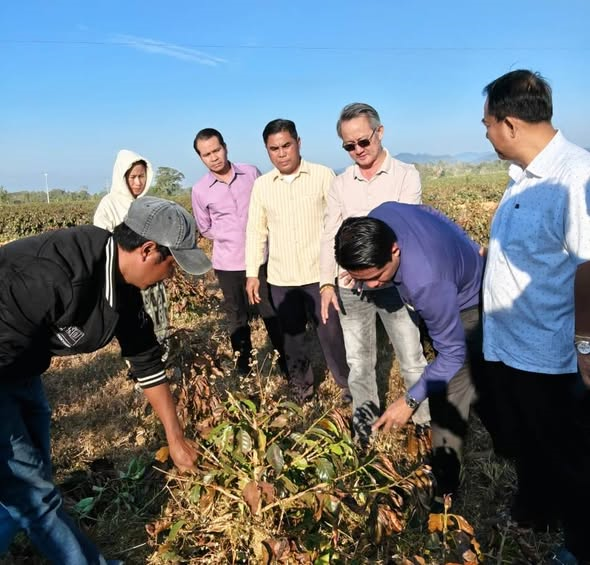
(KPL) Coffee plantations in Pakxong District, Champasak Province, have been affected by cold weather and heavy frost, with Arabica coffee plants experiencing the most significant damage. Relevant authorities are currently conducting field assessments to determine the extent of the impact.
The Champasak Provincial Department of Agriculture and Forestry has issued technical guidance to farmers on frost prevention and recovery measures. Farmers are advised to mulch around the base of coffee plants using straw, dry grass, or coffee husks to retain soil warmth and moisture. For young seedlings, temporary coverings made from cloth or similar materials are recommended to prevent direct frost exposure.
Authorities also recommend spraying water on coffee leaves early in the morning before sunlight reaches the plants, as this helps remove ice crystals and reduces leaf burn caused by sunlight refraction.
In areas experiencing severe cold, farmers are advised to use smoke to raise temperatures in coffee gardens. Suitable materials include rice husks, coffee husks, straw, or dry grass mixed with fresh grass to create dense smoke rather than strong flames. Smoke piles should be placed on the upwind side of plantations, spaced 10–20 meters apart, and ignited during the coldest hours, from around 3:00 a.m. until sunrise, with strict attention to fire safety.
For plants damaged by frost, authorities advise against immediate pruning. Lightly affected plants should be allowed to recover naturally. Moderately damaged plants may be pruned back to healthy tissue after temperatures rise, while severely damaged plants may require heavy pruning to stimulate new growth. After pruning, farmers should apply organic manure or nitrogen-rich fertilizer, ensure adequate watering, and spray copper-based fungicides to prevent disease.
Provincial agriculture authorities will continue to monitor the situation and provide technical support to affected coffee growers.
KPL

