KPL
China's long-term development has been driven by policy continuity, institutional stability and sustained reform, according to Wang Wen, Dean of the Chongyang Institute for Financial Studies at Renmin University of China, during an international media symposium held in Beijing on June 29.
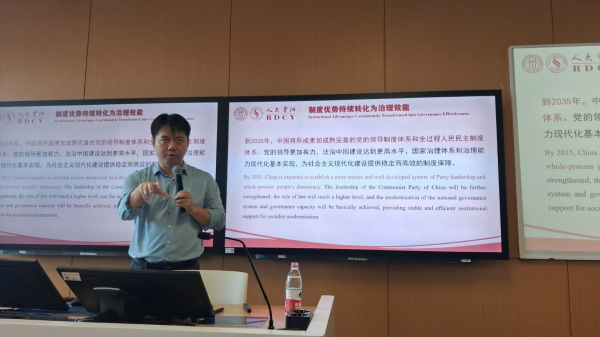 Addressing journalists from around the world, Wang described China's modernization process as being similar to the principle of "compound interest," where continuous policy achievements accumulate over time to generate long-term development benefits. He said China's ability to maintain political stability, pursue consistent reforms and avoid major disruptions has enabled the country to sustain rapid economic and social progress.Wang identified five key areas supporting China's high-quality development: improving public well-being, expanding modern consumption, advancing high-end manufacturing, developing digital and green infrastructure, and strengthening the modern service sector.He also noted that China's modernization has been accompanied by major reform efforts to address challenges such as poverty, corruption, environmental protection and economic pressures. These measures, he said, have helped improve governance while supporting sustainable development.Looking ahead, Wang outlined China's development priorities through 2035, including building a high-standard socialist market economy, improving people's livelihoods, advancing ecological protection, strengthening cultural development, enhancing national security and further modernizing governance.He emphasized that China's modernization model is not intended as a blueprint for other countries but as an example demonstrating that nations can pursue development based on their own national conditions, institutional strengths and long-term development strategies.The symposium formed part of Renmin University's engagement with international media to promote dialogue on China's economic transformation and future development agenda.
KPL

