KPL
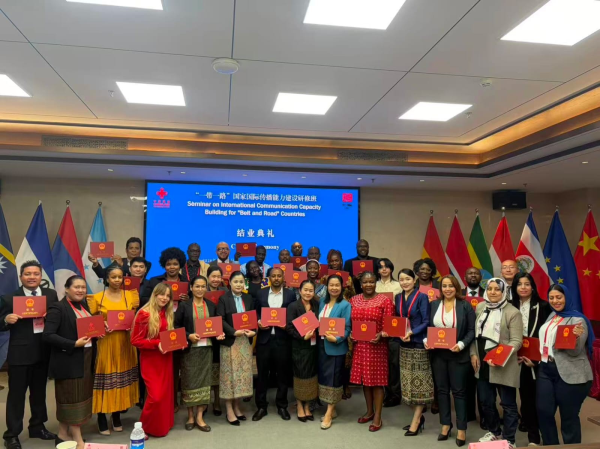
Bringing together 37 government officials, media professionals and technical personnel from 12 countries, the Training Program on International Communication Capacity Building for Belt and Road Countries successfully concluded on November 11, 2026, marking the end of a 14-day journey of learning, cultural discovery and international friendship.
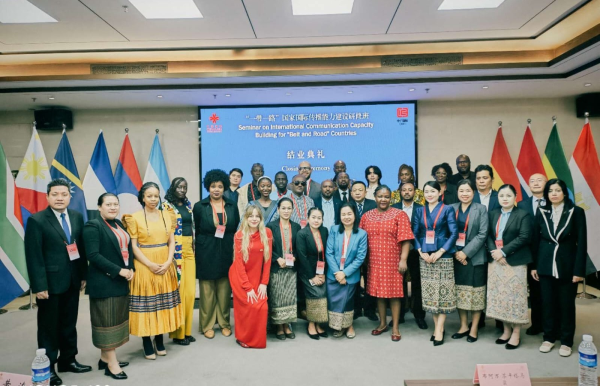
Held from October 29 to November 11, the program provided participants from Nauru, Costa Rica, South Africa, Lesotho, Ethiopia, Ghana, Egypt, The Gambia, Cabo Verde, Honduras, Laos and the Philippines with an opportunity to explore China's evolving media landscape, exchange professional experiences and strengthen their international communication capabilities.
Organized with the support of the Ministry of Commerce of the People's Republic of China, the program combined classroom lectures, professional discussions and field visits, creating a platform where knowledge crossed borders and different perspectives came together.
In Beijing, participants explored the principles of international communication, media operations and cross-cultural engagement. Beyond the classroom, their learning journey extended to the Great Wall, where they experienced the historical depth and cultural inclusiveness of Chinese civilization. Visits to leading media organizations, including Ganzhou Radio and Television Station and Gannan Daily, offered valuable insights into China's integrated media development, public opinion guidance and international storytelling practices.
The journey also took participants to Jiangnan Weicheng, the Nanping Prefectural Government Office and local cultural sites. Visits to Jiangxi Xiangcao Company and Aduo Village provided a closer look at rural revitalization, distinctive industries and efforts to improve people's livelihoods.
For the participants, however, the most meaningful lessons went beyond professional knowledge.
Natalina Andrade, a journalist working for The Nation newspaper and Alfa Radio in Cabo Verde, described her experience in Dayu as extraordinary. Having spent six years in journalism, she said visiting China allowed her to understand the country's development through direct encounters with its people and communities.
"What I liked most is how their culture and traditions match with development and technology," she reflected, highlighting China's ability to preserve its cultural identity while embracing modernization.
Gabriel Calison, a policy analyst at the StratSearch Foundation Inc. in the Philippines, also praised the program for creating opportunities for international dialogue. He noted that the seminar showcased China's technological and organizational progress in the media sector while allowing professionals from different countries to exchange ideas about the challenges facing traditional media.
He described the experience as exceptional and important to strengthening international cooperation and development among Belt and Road countries.
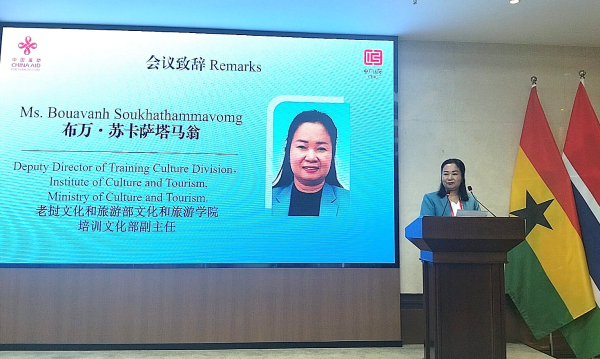
Speaking on behalf of fellow participants, Ms. Bouavanh Soukhathammavong of Laos expressed gratitude to the Chinese Ministry of Commerce, the China Belt and Road International Communication Center (CBIC), and participating Chinese media organizations for their support and hospitality. She emphasized that the program had provided not only valuable professional knowledge but also meaningful friendships and lasting international connections.
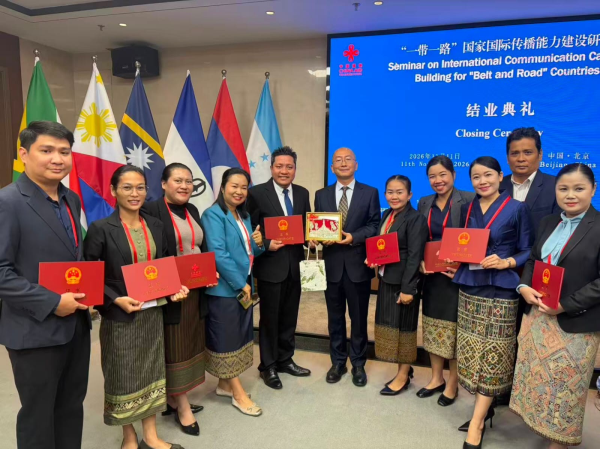
At the graduation ceremony, Huang Tao, Deputy Secretary of the Party Committee and Secretary of the Discipline Inspection Commission of China Radio International, congratulated all 37 participants on successfully completing the program. He emphasized that communication serves as a bridge for people-to-people exchanges and media as a link for mutual learning among civilizations.
He encouraged participants to apply their knowledge in their respective countries, becoming storytellers of their own national development and China's story, while continuing to promote friendship and practical cooperation.
As the program concluded, one message stood out: international communication is not simply about sharing information; it is about understanding people, respecting differences and discovering common aspirations.
The certificates may mark the completion of 14 days of training, but the friendships, professional connections and shared experiences created in China are only beginning. For these 37 participants, the journey home carries more than new knowledge—it carries the promise of stronger cooperation and a shared vision for the future.
KPL

