KPL
Rising demand for edible bird’s nest products in China is fueling the growth of the country’s first officially approved raw bird’s nest processing enterprise, which relies exclusively on premium imports from Malaysia to supply its expanding domestic market.
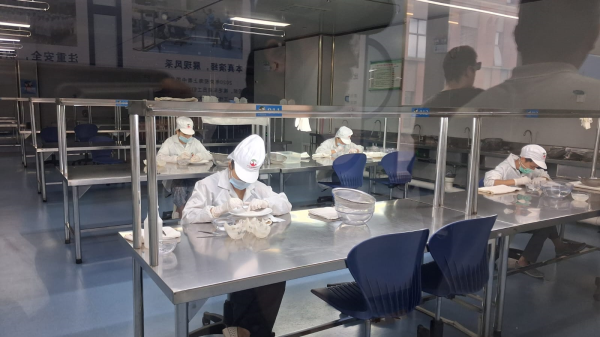
An international delegation of journalists recently visited China-Malaysia Jinguyan (Guangxi) Biotechnology Co., Ltd., located in the China-Malaysia Qinzhou Industrial Park (CMQIP) in Guangxi. The company is the first enterprise in China authorized to process and produce raw edible bird’s nests and operates as a wholly owned subsidiary of the state-backed China-Malaysia Investment Holding Group.
The facility forms a key part of the “Two Countries, Twin Parks” cooperation initiative between China and Malaysia, strengthening bilateral trade and investment in the agricultural and wellness sectors.
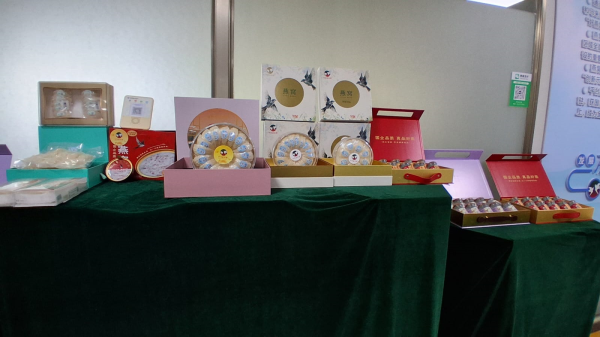
Although the factory has a planned annual processing capacity of up to 500 tons of raw bird’s nests and the potential to create as many as 7,000 jobs, production is adjusted according to market demand. The company currently imports about one ton of premium raw bird’s nests each year, sourced exclusively from Malaysia.
“We mainly import raw bird’s nests from Malaysia because they provide the highest-quality raw materials,” said Ms. Long Hui, a representative of China-Malaysia Jinguyan Biotechnology, during a media briefing. “Although China has approved raw imports from other Southeast Asian countries, including Vietnam and Cambodia, our focus remains firmly on Malaysian supply.”
The company employs strict quality-control measures, with trained workers manually cleaning and processing an average of 10 to 30 bird’s nest pieces per person each day. Output varies with demand, reaching approximately 4,000 bottles per week under normal conditions and up to 4,000 bottles in a single day during peak production periods.
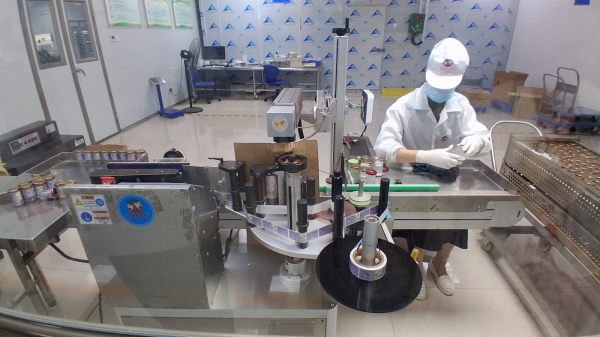
Generating annual revenue of about 20 million RMB (US$2.76 million), the enterprise sells exclusively to the domestic Chinese market, where individual bottles retail for around 60 RMB (US$8.30). Despite international interest, it currently exports no finished products.
“Domestic demand continues to outstrip supply, so our priority remains meeting the needs of Chinese consumers,” Ms. Long said, adding that the company may consider exports in the future if opportunities arise.
The visit highlighted the growing economic and agricultural cooperation between China and ASEAN countries, with premium raw materials from Southeast Asia being transformed into high-value consumer products for China’s rapidly expanding wellness market.
KPL

