
Powering Progress: How a Cross-Border Grid is Transforming a Lao Community


Aerial View of the Laos–China 500 kV Transmission Line Project (Lao Section)
While its primary purpose is to transmit clean energy, the project’s most immediate impact is human: generating employment, upskilling the local workforce, and fostering pathways to sustainable prosperity.
“As the project, now 80 percent complete and on track for a 2026 operational launch, progresses, it has become a significant engine for local employment. For many in Namor, this massive undertaking has translated into tangible opportunities,” said Mr. Zhang Hao, Project Manager of the Laos–China 500 kV Transmission Line Project (Lao Section). The project also emphasizes environmental sustainability, restoring greenery and replanting trees around the construction area.
.jpg)
The initiative spans a 183.5-kilometre cross-border transmission line, linking Namor to China’s Xishuangbanna in Yunnan. Supported by new substations and grid infrastructure, it will enable a two-way electricity exchange with a capacity of 1.5 million kilowatts, delivering approximately 3 billion kilowatt-hours of clean hydroelectric energy annually. Jointly developed by Electricité du Laos Transmission (EDL-T) and China Southern Power Grid (CSG), the project stands as a cornerstone of bilateral cooperation and regional energy integration.
Mr. Vilasay Xaylouangsi, an official from EDL-T, noted that local residents have found work in construction, logistics, and site support, providing direct income to households and contributing to community development. This employment infusion ensures that the benefits of this transnational infrastructure are experienced locally long before the first megawatt flows.

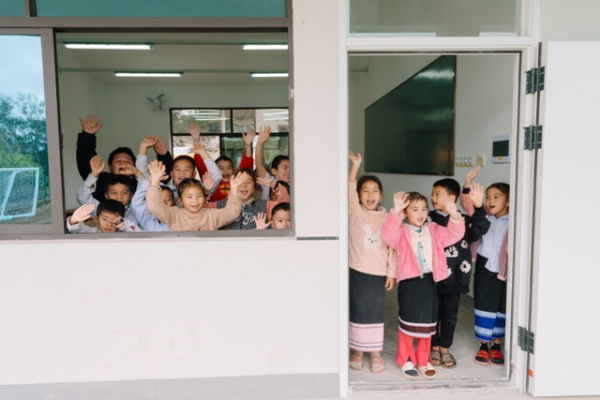
Beyond infrastructure, the project is leaving a lasting imprint on education. As part of its community development initiatives, new school facilities have been constructed to replace aging structures. Teachers like Ms. Bath Phothilath at Namor Tai Primary School highlight that the improved classrooms provide a more conducive learning environment. “The assistance has created a more convenient and comfortable space for our students,” she said, linking physical improvements to the growth of human potential.

Ms. Bath Phothilath, teacher at Namor Tai Primary School
Ultimately, the Laos–China 500 kV project weaves a dual thread of development: empowering today’s workforce while investing in the next generation. It positions Laos as a key clean energy hub in the Lancang–Mekong region and strengthens the country’s role in regional energy exports. In Namor district, its impact is already visible—in steady jobs for parents, modern classrooms for children, and a growing optimism that a connected, sustainable future is within reach.