
Guarding the vulnerable: One Leader’s Mission to Protect Girls and Women in Attapeu

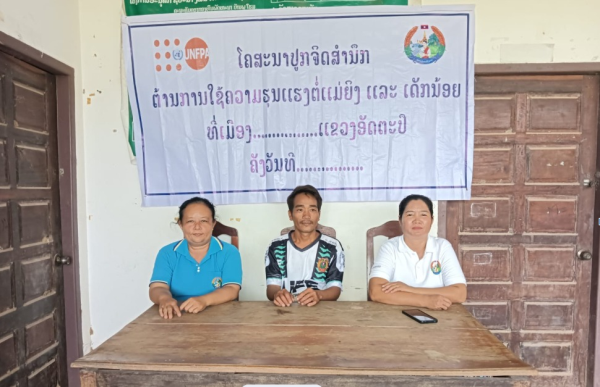
For Mrs. Bounday Thammavongsa, breaking that silence and protecting women and children from violence has been a calling for nearly two decades.
Born and raised in Attapeu Province, the 51-year-old now serves as Director of the Provincial Protection and Counseling Centre for Women and Children (PCWC), where she also works directly with survivors as a case manager.
Mrs. Bounday’s journey into gender-based violence (GBV) prevention and response began long before she held an official title. She started learning and working on GBV issues in 2007, but it was a distressing incident close to home that strengthened her determination to act.
"I saw my neighbours having a fight," she recalls. "The violence became so severe that the woman lost consciousness. I knew I had to help her."
She supported using the survivor-centred approach she had learned, putting the survivor's rights, safety, and choices first. She shared clear information about the services available and, with the survivor's consent, helped connect her to the support she chose. It was the first case in which she became personally involved, and it reinforced an important lesson: violence against women can affect any family, regardless of social or professional background.
In 2017, Mrs. Bounday joined the Provincial Lao Women’s Union, deepening her engagement in protecting women and children and helping survivors access the support they need.A
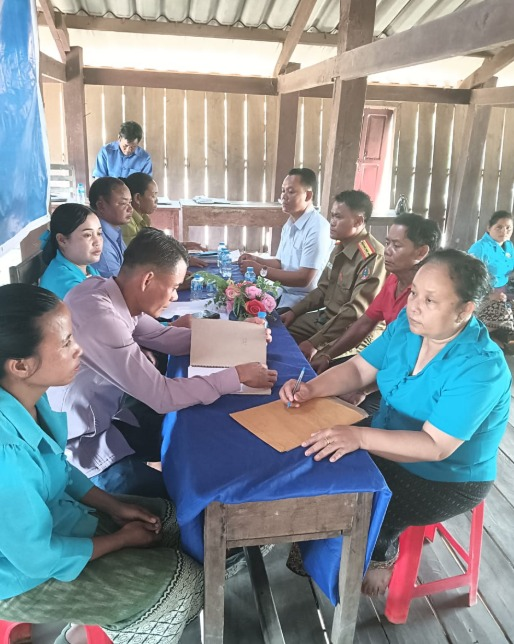
major step forward came in 2023, when the Lao Women’s Union, with support from UNFPA and financial assistance from the Government of Japan, opened the Protection Centre for Women and Children in Attapeu. The centre provides a dedicated safe space where survivors can access temporary accommodation, counselling, psychological first aid, legal advice and vocational support, as well as referrals to health, justice and other specialized services.
At the opening of the centre in 2023, Mrs. Bounday captured what the new service meant for the province: "We are very happy that this protection centre will be up and running to support the people from our community."
For Mrs. Bounday, however, having a safe space is only part of the solution. Her years as a frontline GBV service provider and case manager have shown her how unequal gender norms and power relations within households can leave women with limited decision-making power and make it more difficult to seek help.
In some cases, these vulnerabilities can be compounded by substance abuse, which may heighten tensions and increase the severity of violence within households.
She is also concerned about risks linked to cross-border and transnational marriages, particularly when economic hardship makes promises of marriage and financial security attractive to families or young women. In some situations, women and girls may enter such arrangements with limited information about the person involved or the risks they may face, including exploitation, trafficking or abuse.
"It is not as easy as people think," Mrs. Bounday says. "Most people do not consider the dangers of marrying someone they do not know. As long as they see immediate money, they go for it. We must be far more cautious."F
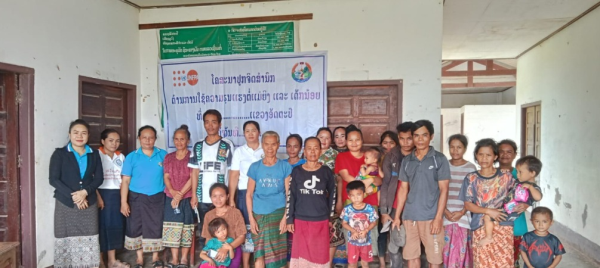
or Mrs. Bounday, these cases point to the need for stronger prevention, community awareness and cross-border coordination. She hopes to see continued partners’ support for frontline GBV services, outreach in remote communities, and better information for women, girls and families so that risks can be identified earlier and protection is available before a situation becomes a crisis.
Over the past decade, protection and counselling services have expanded, and frontline GBV service providers have gained new skills, tools and safer spaces in which to support survivors. Yet challenges remain.
Complex cases can require stronger and faster coordination among protection, health, justice and law-enforcement actors, particularly when a survivor is in immediate danger or when a case involves cross-border movement. Reaching women in remote communities and following up on cases that extend beyond provincial or national borders can also require significant time and resources.
For Mrs. Bounday, this is why responding to violence cannot begin only after harm has occurred. Prevention must start earlier: within families, schools and communities.
Women and girls need access to information about their rights and available services, while young people need the knowledge and confidence to recognize situations that may place them at risk and to seek support when needed.
"If something makes you feel unsafe, step back," Mrs. Bounday urges.
Recognizing warning signs can help people seek support earlier, but responsibility for violence always lies with the person committing it. Families, communities and institutions all have a role to play in creating environments where women and girls can live safely and exercise their rights.
Mrs. Bounday’s message also extends to parents and communities: awareness and prevention should begin before a crisis occurs.
"GBV is a very worrying issue," she says. "I urge parents and the community to pay close attention. Prevention is always better than cure. It is the absolute best approach."
For Mrs. Bounday, every woman who walks through the centre’s doors represents more than a case. She is a person who has made the brave decision to seek safety and who deserves to be heard, protected and given the opportunity to rebuild her life.